2026-08-12T13:13:50.262Z ·
The Dental Implant Process, Step by Step
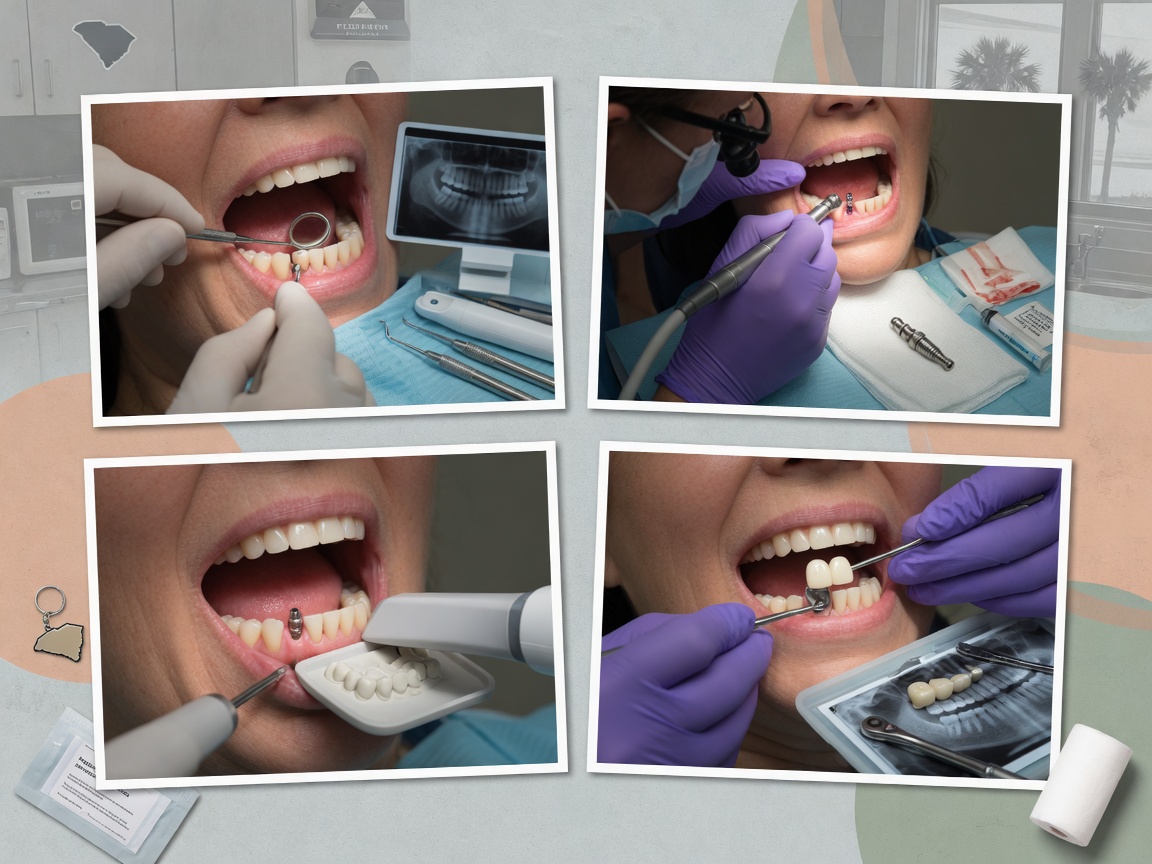
The dental implant process has five stages: consultation with 3D imaging, any preparatory work such as extraction or bone grafting, surgical placement of the titanium post, a healing period of three to six months while the bone fuses to the implant, and finally the abutment and crown. Total time from first appointment to finished tooth typically runs four to twelve months depending on whether grafting is required.
Stage One: Consultation and Imaging
Everything starts with a cone beam CT scan or equivalent 3D imaging. This measures bone height and width at the exact implant site and shows where the nerve canal and sinus cavity sit. Without it, implant placement is guesswork.
This visit is also where a written treatment plan and cost breakdown should come from. If a practice proposes implants without imaging first, that's a real warning sign. Our consultation page covers what to bring and what you'll leave with.
Stage Two: Extraction and Site Preparation
If the failing tooth is still in place, it comes out first. Sometimes an implant can be placed into the fresh socket in the same appointment, which is called immediate placement. Whether that's possible depends on bone quality and whether infection is present.
If bone volume is insufficient, bone grafting happens here, and it adds three to six months to the overall timeline while the graft integrates. Upper back teeth may need a sinus lift instead or in addition. This stage is the single biggest variable in how long your treatment takes.
Stage Three: Implant Placement
The surgical appointment itself typically takes one to two hours for a single implant. The gum is opened, a channel prepared in the bone to precise dimensions, and the titanium post threaded into place. The gum is then closed over or around it.
Most patients are surprised by how manageable this is. It's done under local anesthetic, with sedation available, and post-operative discomfort is usually described as less than an extraction. Swelling peaks around day two or three and settles from there.
Stage Four: Osseointegration
This is the wait, and it's the part that can't be rushed. Bone cells grow onto and into the implant surface, locking it in place. Lower jaw implants typically take three to four months, upper jaw four to six, because upper jaw bone is less dense.
You're not without teeth during this period. A temporary crown, flipper, or in full-arch cases a temporary bridge, is worn throughout. Appointments during this stage are brief check-ins, which is why patients traveling from Hartsville or Mullins find the middle of treatment far less demanding than the start.
Stage Five: Abutment and Crown
Once integration is confirmed, the abutment is attached to the implant and an impression or digital scan is taken. The final crown is fabricated to match your surrounding teeth in shade and contour, then fitted and adjusted.
For front teeth this stage takes the most care, since gum contour and shade matching determine whether the result looks natural. This is where the difference between an adequate implant and an excellent one shows up.
Where the Timeline Compresses
Same-day implants place the implant and a temporary crown in one visit. This doesn't skip osseointegration; it just means you leave with a tooth while fusion happens underneath. Candidacy depends on achieving enough initial stability at placement.
All-on-4 works on the same principle at arch scale, delivering a temporary full bridge the same day the implants go in. Our timeline article breaks down realistic durations for each scenario.
What Determines Success
Implant success rates are high, generally cited above 95% over ten years for well-placed implants in healthy patients. The variables that matter most are smoking, uncontrolled diabetes, and oral hygiene during healing.
Smoking in particular has a well-documented effect on implant failure rates. If you smoke, being honest about it during planning changes how the case is approached rather than disqualifying you. Our page on risks and complications covers this in more depth.