2026-08-08T13:13:50.262Z ·
How Long Does Getting a Dental Implant Take?
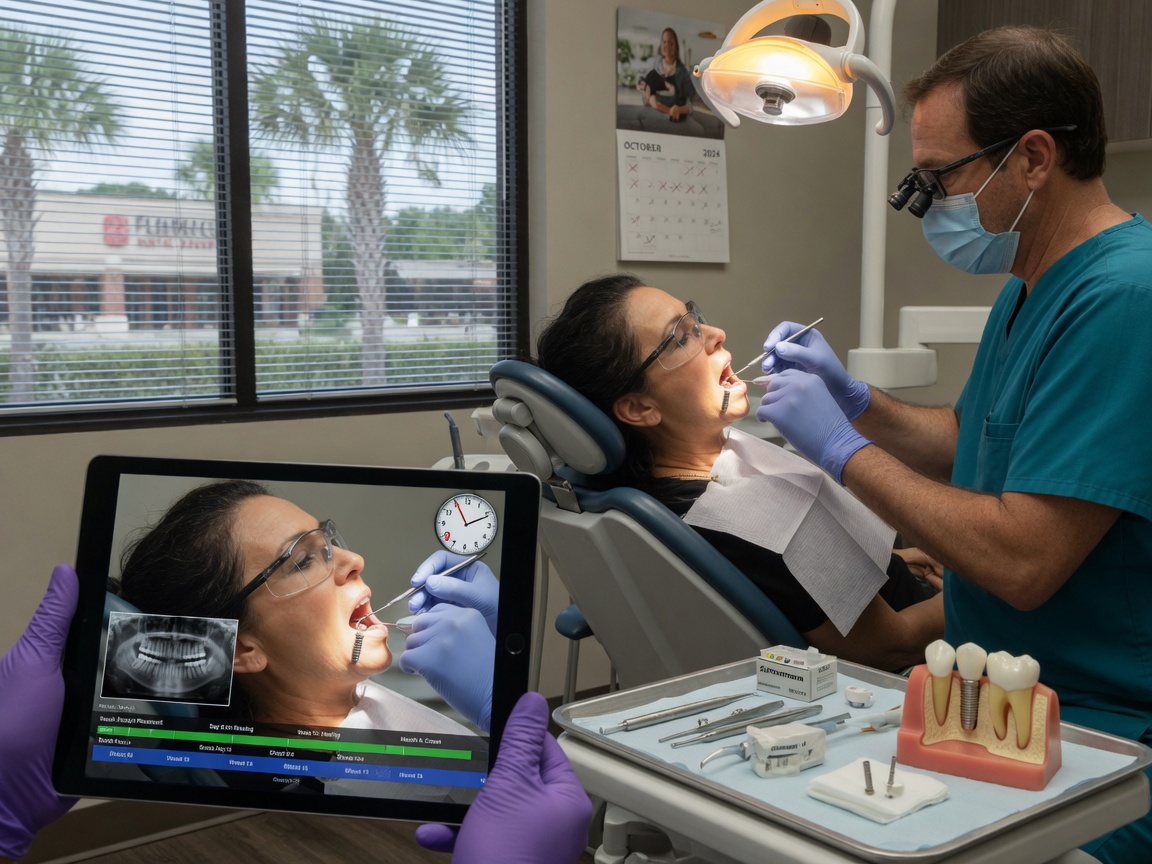
Getting a dental implant typically takes four to eight months from surgical placement to the final crown. Cases requiring bone grafting first generally run nine to twelve months, since the graft needs three to six months to integrate before the implant can even be placed. Same-day implants deliver a temporary tooth immediately but still require the same underlying healing period before the permanent crown goes on.
Where the Time Actually Goes
Almost all of it is biology, not scheduling. The surgical appointment is one to two hours. The crown fitting is under an hour. Everything between those two visits is bone fusing to titanium, and that process runs on its own clock.
Lower jaw implants integrate faster, typically three to four months, because the mandible is denser bone. Upper jaw implants generally need four to six months. This is why a patient replacing an upper molar and a patient replacing a lower molar can get different timelines for what looks like identical treatment.
Add Grafting and Add Months
Bone grafting is the biggest single addition to a timeline. A socket graft placed at extraction time typically needs three to four months before implant placement. More extensive ridge augmentation can need six.
A sinus lift for upper back teeth generally requires four to six months of healing before implants go in, though in some cases with adequate residual bone the lift and the implant happen in the same appointment. Imaging determines which applies to you.
The Fast Routes
Same-day implants place implant and temporary crown together. You leave with a tooth. The permanent crown still waits for full integration, but the visible timeline collapses to a single appointment.
This requires achieving enough primary stability when the implant is seated, which depends on bone density at the site. It isn't available to everyone, and a provider who offers it to every patient regardless of imaging is overselling.
Full-Arch Timelines
All-on-4 delivers a fixed temporary bridge on the day of surgery, with the final bridge fitted after roughly four to six months of healing. Patients walk in with failing teeth or dentures and leave the same day with fixed teeth.
Implant-supported dentures follow a similar arc, though many cases wait for integration before connecting the denture to the implants, which means wearing your existing denture unmodified during healing.
Number of Appointments
A straightforward single implant with no grafting typically involves four to six visits: consultation and imaging, placement, one or two healing checks, impression or scan, and crown fitting.
Grafting adds a surgical visit and its own healing checks. Full-arch cases involve more appointments overall but compress the visible transformation into one day. For patients driving from Lake City or Johnsonville, the appointment count matters more than total months, and it's worth asking for the visit schedule in writing at planning stage.
What Extends a Timeline Unexpectedly
Infection at the site, a graft that doesn't integrate as expected, or an implant that fails to achieve stability all add time. These are uncommon but not rare, and any provider who describes the timeline as guaranteed is overpromising.
Smoking and uncontrolled diabetes both slow healing measurably. Being straight about these during planning produces a realistic schedule instead of a disappointing one. Our complications article covers what actually goes wrong and how often.