2026-08-16T13:13:50.262Z ·
Types of Dental Implants Explained
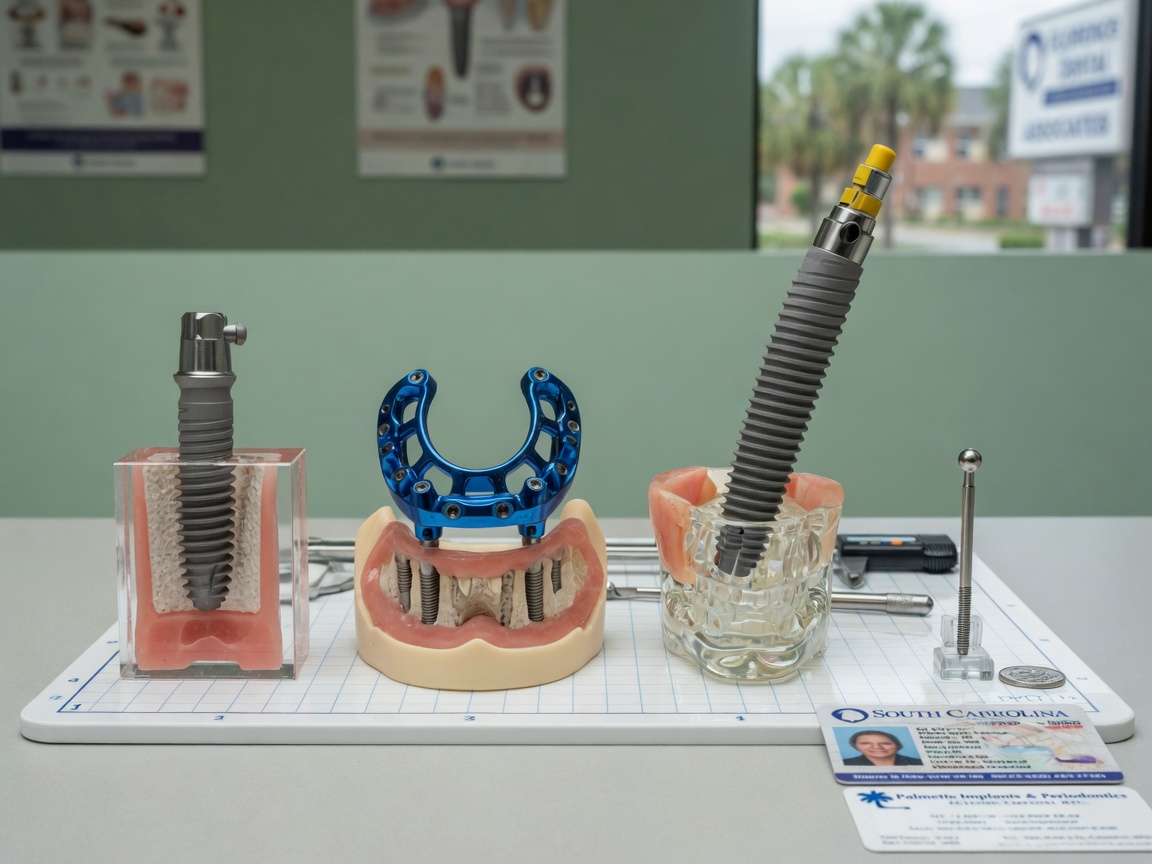
Dental implants are classified three ways: by design, where endosteal implants are placed into the jawbone and account for the vast majority of cases while subperiosteal implants rest on top of the bone and zygomatic implants anchor into the cheekbone; by size, where standard implants measure roughly 3.5 to 6mm wide and mini implants under 3mm; and by application, from a single crown to a full-arch fixed bridge.
Endosteal Implants
This is the standard implant and what nearly everyone means by the term. A titanium screw is placed directly into the jawbone, left to fuse with the bone over several months, then restored with a crown, bridge or denture attachment.
Endosteal implants have the longest clinical track record and the most predictable outcomes. They require adequate bone volume at the site, which is why bone grafting exists as a preparatory step for patients who don't have it.
Subperiosteal Implants
A subperiosteal implant sits on top of the jawbone underneath the gum tissue rather than in the bone. It was developed for patients with severe bone loss who couldn't support a conventional implant and weren't candidates for grafting.
These are far less common today. Improvements in grafting techniques and the arrival of angled placement approaches like All-on-4 mean most patients who would once have needed a subperiosteal implant now have better options.
Zygomatic Implants
Zygomatic implants anchor into the cheekbone rather than the upper jaw, and they're reserved for cases of severe upper jaw bone loss where nothing else will hold. They're substantially longer than standard implants and require specialized surgical training.
They are a genuine last resort, not an alternative to consider casually. Most patients told they lack bone for upper implants are better served by a sinus lift, which raises the sinus floor and creates room for conventional implants.
Standard vs Mini Implants
Size is the other axis. Standard implants are two-piece designs, roughly 3.5 to 6mm in diameter, with a separate abutment. Mini implants are single-piece, under 3mm, and can often be placed without cutting a flap in the gum.
Minis cost less, heal faster and work in bone too narrow for a standard implant. They also carry less load, which makes them well suited to stabilizing a lower denture and less suited to replacing a single molar that takes heavy chewing force.
Categories by What They Replace
A single tooth implant carries one crown. An implant-supported bridge uses two implants to carry three or four teeth, which is why replacing several adjacent teeth costs less than one implant per gap.
For a full arch, the choice is between a removable implant-supported denture anchored by two to four implants, or a fixed full-arch bridge on four to six implants that never comes out.
Materials: Titanium and Zirconia
Titanium is the standard implant material, chosen because bone fuses to it reliably. Zirconia implants are a ceramic alternative, one-piece and metal-free, favored by patients with titanium sensitivity or those who want to avoid any possibility of a grey line showing at the gumline on a front tooth.
Zirconia has a shorter track record and typically costs more. For most patients titanium remains the better-evidenced choice, and the aesthetic concern it raises is manageable with proper placement depth.
Which Type Applies to You
The type isn't really a menu choice. It's determined by how much bone you have, where the gap is, how many teeth are missing, and what force the restoration needs to handle. Imaging at consultation settles most of it in one visit.
If a provider proposes zygomatic implants at a first appointment without imaging, or proposes minis for a heavy chewing surface, ask why. Both have real uses and both get misapplied.